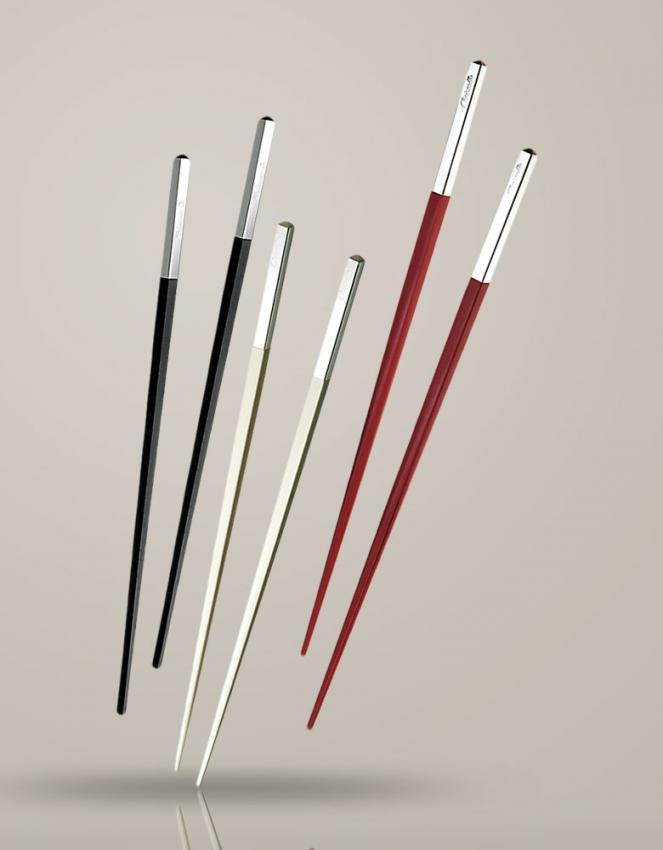
Christofle cutlery in Christofle silver and sterling silver

Cutlery of Christofle belongs

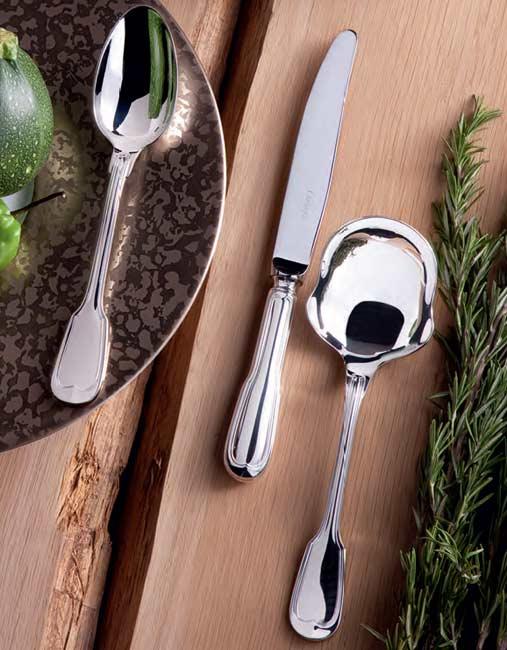
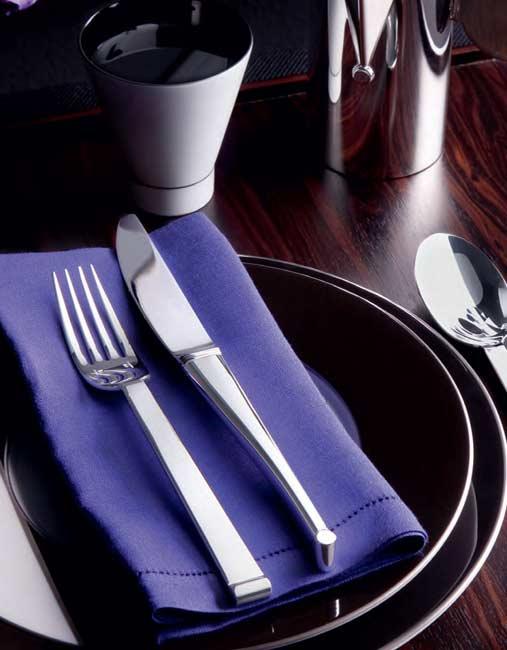
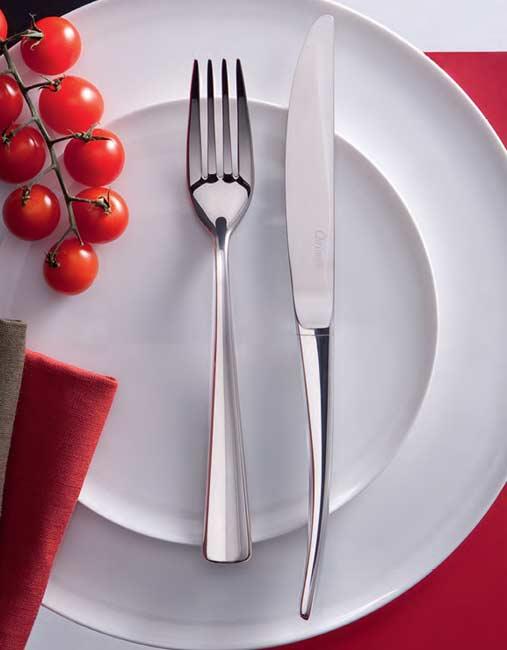
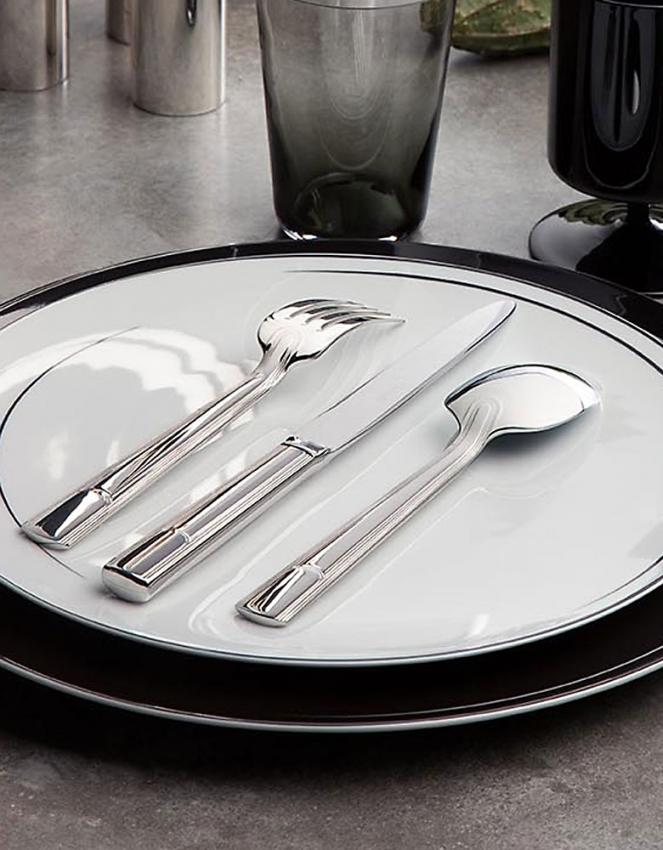
without doubt to the best known products of this brand. Cutleries of Christofle are setting benchmarks in design and style. You find a big choice in cutleries in silver plated, a choice of exquisite cutleries in sterling silver and an assortment rich in variation of cutleries in stainless steel in the universe of Christofle. The most extensive range of the cutleries is are found with the models in Christofle silver – silver plated.

Christofle cutlery in Christofle silver and sterling silver

45 collections

silverplatedAlbi
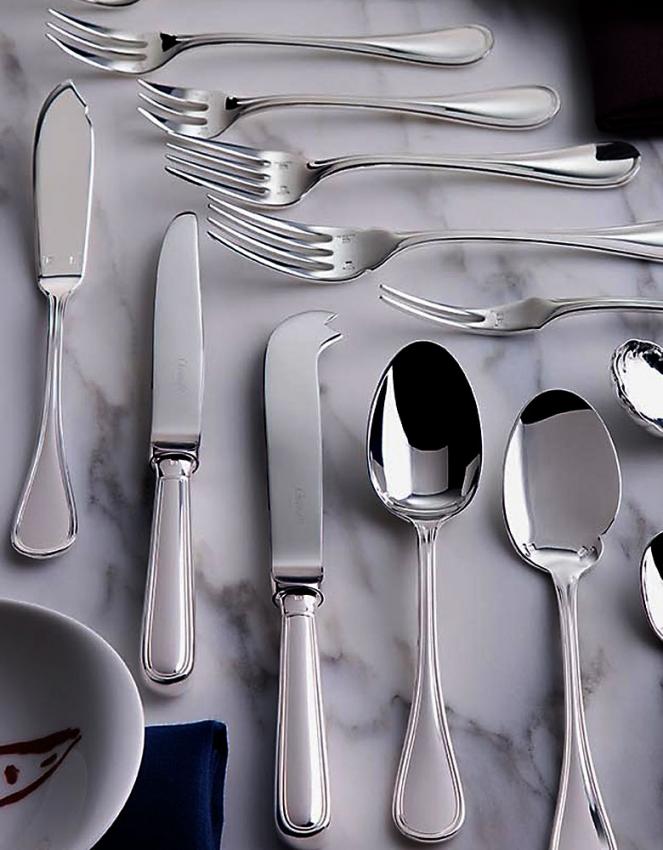
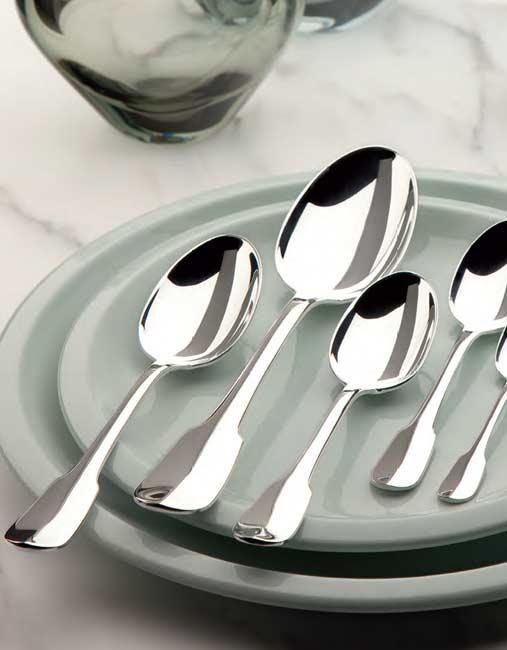
AlbiThis pattern takes its name from the town of Albi, which is situated between Bordeaux and Toulouse. Here we find the famous fortified cathedral of Albi. The pure straight lines of the nave inspired this pattern. This is a pattern which defies time and changing fashions. It will enhance the quality of any table and any style of porcelain. Always amongst Christofle's most requested patterns, many consider it as a 'must' from Christofle. In essence it is simple but with a generous exterior molding which is highlighted by a fine interior ridge.
sterling silverAlbi
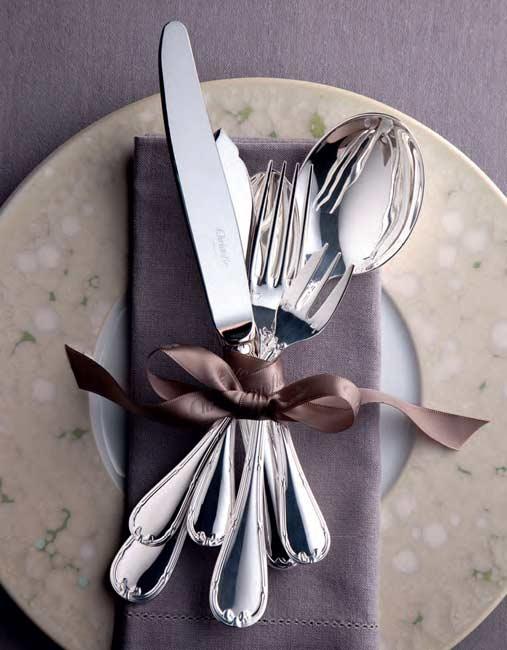
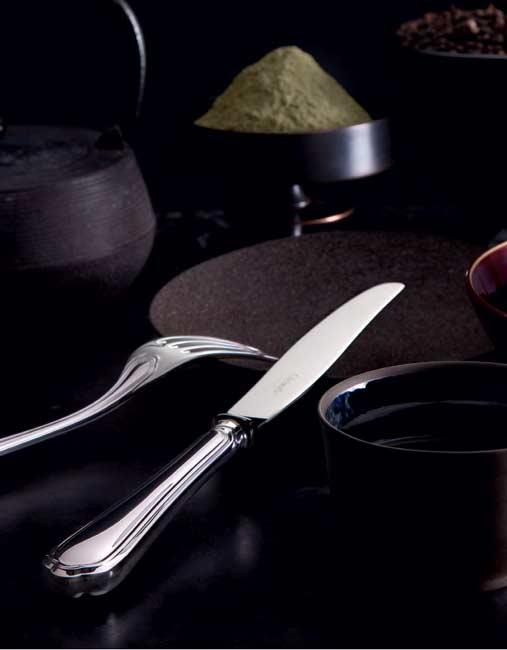
AlbiThis pattern takes its name from the town of Albi, which is situated between Bordeaux and Toulouse. Here we find the famous fortified cathedral of Albi. The pure straight lines of the nave inspired this pattern. This is a pattern which defies time and changing fashions. It will enhance the quality of any table and any style of porcelain. Always amongst Christofle's most requested patterns, many consider it as a 'must' from Christofle. In essence it is simple but with a generous exterior molding which is highlighted by a fine interior ridge.
silverplatedAmérica
AméricaDuring the “roaring twenties” (the years which followed World War One), North America was the place, which through its music, literature and lifestyle, best symbolized for the French, liberty and victory. Christofle, thought it apt to pay hommage to this phenomonen through a pattern in the Art-Deco style, calling it “America”. This pattern has become a modern classic. The cut-edges of the spatula highlight the solid elegance, achieved through a composition of very architecturally styled lines and angles. For many years this pattern was unique to Christofle. During the nineteen eighties, however, when Art-Deco came back into fashion, it was copied by numerous silversmiths.
silverplatedCluny
ClunyThis pattern takes its name from the small town of Cluny, situated in the center of France. In this town, in the X century, Benedictine monks built the Abbey of Cluny. It was once the most considerable medieval monument in the Occident. The sober, austere, architectural style of the abbey inspired this pattern with its lines bereft of superfluous ornamentation. A labour of love demands long hours of patience, understanding and attention. This flatware pattern has been created with such painstaking reverence as a labour of love demands. In the purity of its design, we sence the patience, love and understanding of the medieval monk and scholar. The mood of this creation can be likened to the directness of the message of a liturgy, which itself is a work of the spirit and the hand.
sterling silver · silverplatedCluny
ClunyThis pattern takes its name from the small town of Cluny, situated in the center of France. In this town, in the X century, Benedictine monks built the Abbey of Cluny. It was once the most considerable medieval monument in the Occident. The sober, austere, architectural style of the abbey inspired this pattern with its lines bereft of superfluous ornamentation. A labour of love demands long hours of patience, understanding and attention. This flatware pattern has been created with such painstaking reverence as a labour of love demands. In the purity of its design, we sence the patience, love and understanding of the medieval monk and scholar. The mood of this creation can be likened to the directness of the message of a liturgy, which itself is a work of the spirit and the hand.
silverplatedGaléa
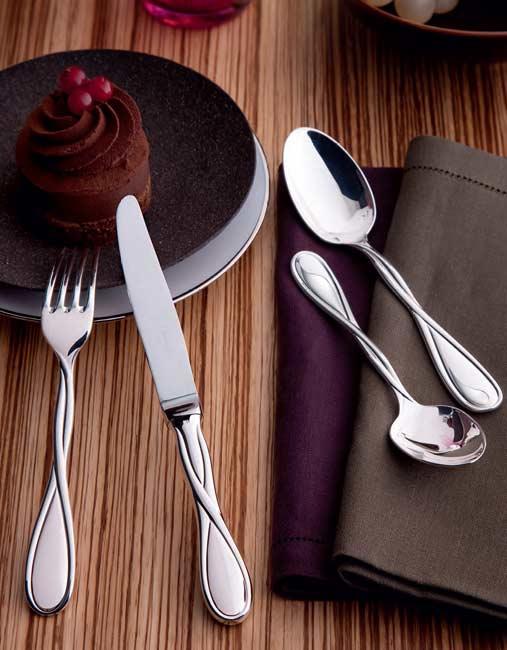
GaléaThis pattern is characterized by an interpretation inspired by an ornamental motif created by Nicolas Cornu in 1775: double interlacing. Supple and rounded forms “like a pebble polished by time.” Softened and pure lines “like water that flows from a spring.” Harmonious movement of the interlacing. Its sensuality invites us to partake in the pleasures of the table. Elegant, luxurious, modern. A exceptional multi-purpose pattern, it harmonizes with all styles of porcelain and trays with fillet designs. A complete offering adapted to setting the most prestigious tables. It is offered in a gift box of six demitasse spoons.
sterling silverMalmaison
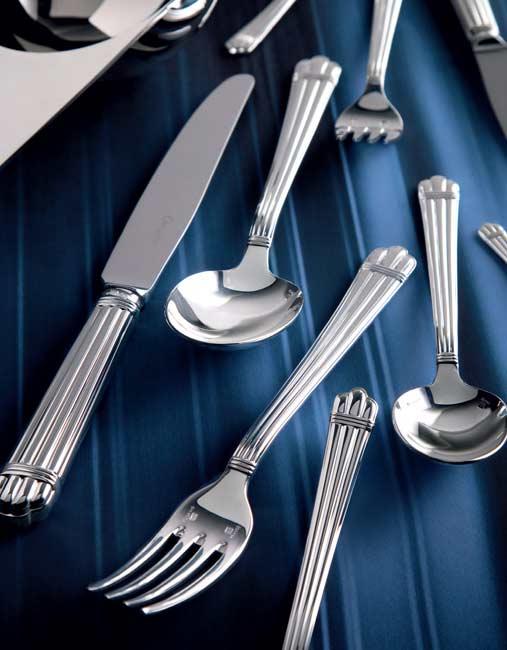
MalmaisonNapoleon Bonaparte commissioned a silverware, which became an excellent example of the French Empire. The pattern was later named after the castle of his wife, empress Joséphine de Beauharnais, which was called vernacular "mal maison" because of its originally lamentable state - a name that remained long after she turned it into a bright castle.\The palm leaf, a typical ornament of the Napoleonic Empire, is surrounded by the central motif of the antiquating lotus leaf. This symbol of military success had to be used by the silversmiths on instructions in the decor, the orderer should have accompanied it even in battles.\Fine chasings of these motifs make the table ware an incomparable character- on our picture arranged with the matching tableware Malmaison Or.
silver plated w/ gold decorMalmaison
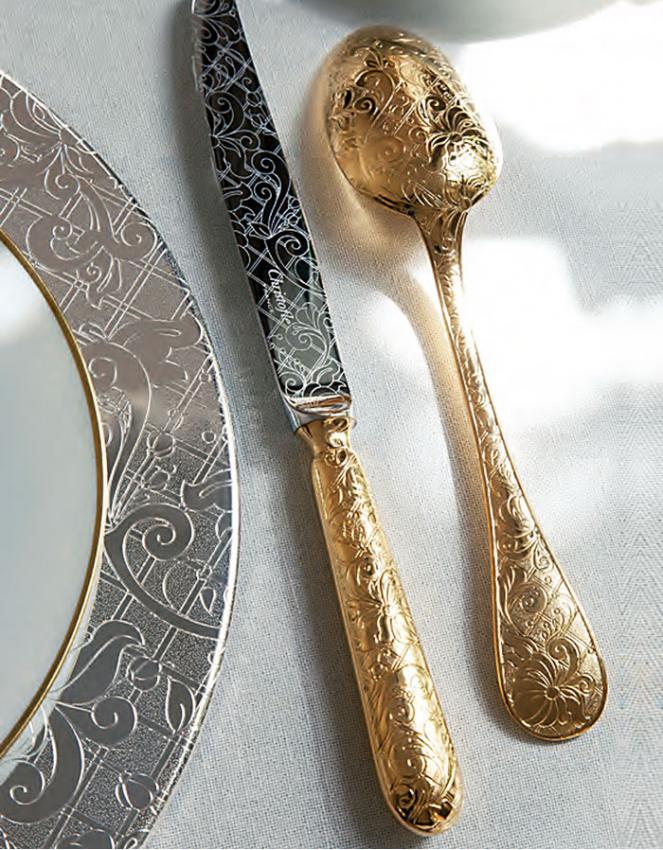
MalmaisonMalmaison Castle, near Paris, was the favourite place of sejour of Napoleon Bonaparte and Empress Josephine. \The stylized palm-leaf is a typical decorative ornament of Napoleonic France. The Emperor had his silversmiths interpret this design specifically as a symbol of 'future military victories', and even travelled with him onto the field of battle. \The central motif of the spatula is composed of a lotus leaf inspired by antiquity. Specially ordered of his silversmiths by Napoleon, this pattern is a fine example of the Empire style. Its character is achieved through the quality of execution of the chasing on the motif, especially that of the knife.
sterling w/ gold accentsMalmaison
MalmaisonMalmaison Castle, near Paris, was the favourite place of sejour of Napoleon Bonaparte and Empress Josephine. \The stylized palm-leaf is a typical decorative ornament of Napoleonic France. The Emperor had his silversmiths interpret this design specifically as a symbol of 'future military victories', and even travelled with him onto the field of battle. \The central motif of the spatula is composed of a lotus leaf inspired by antiquity. Specially ordered of his silversmiths by Napoleon, this pattern is a fine example of the Empire style. Its character is achieved through the quality of execution of the chasing on the motif, especially that of the knife.
silver plated w/ gold decorMarly
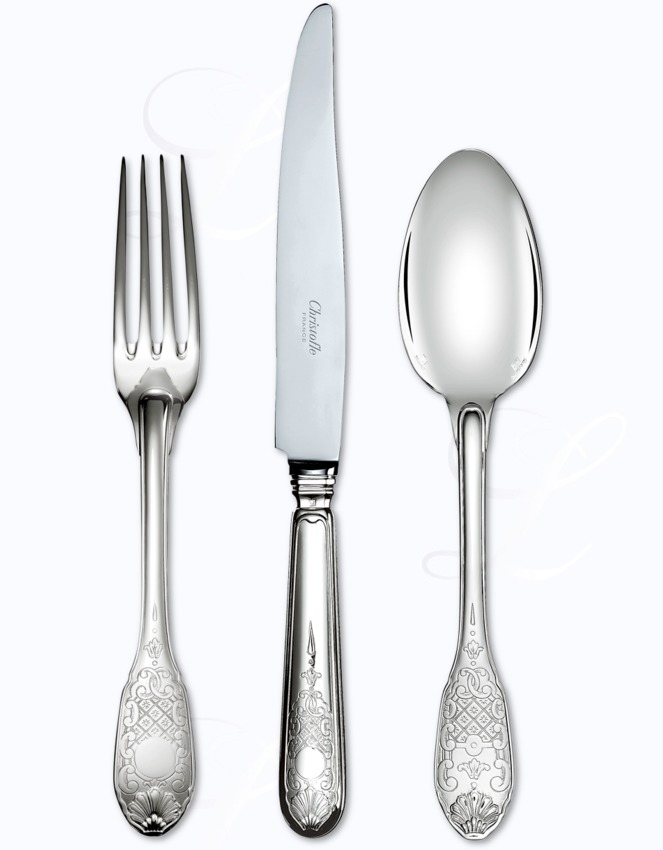
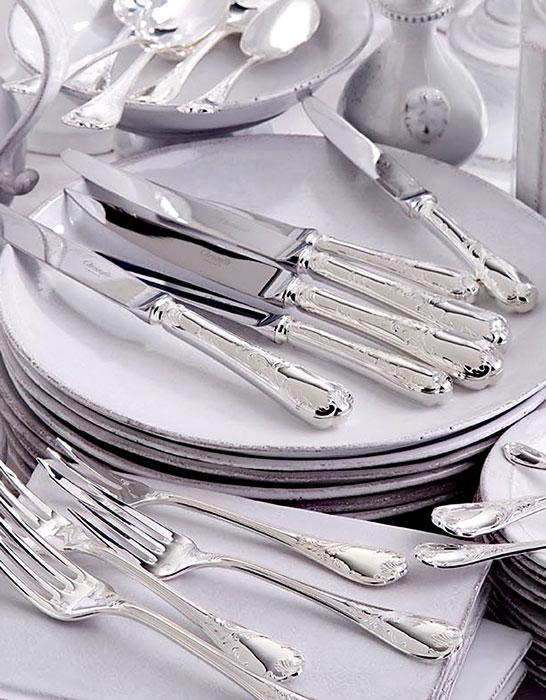
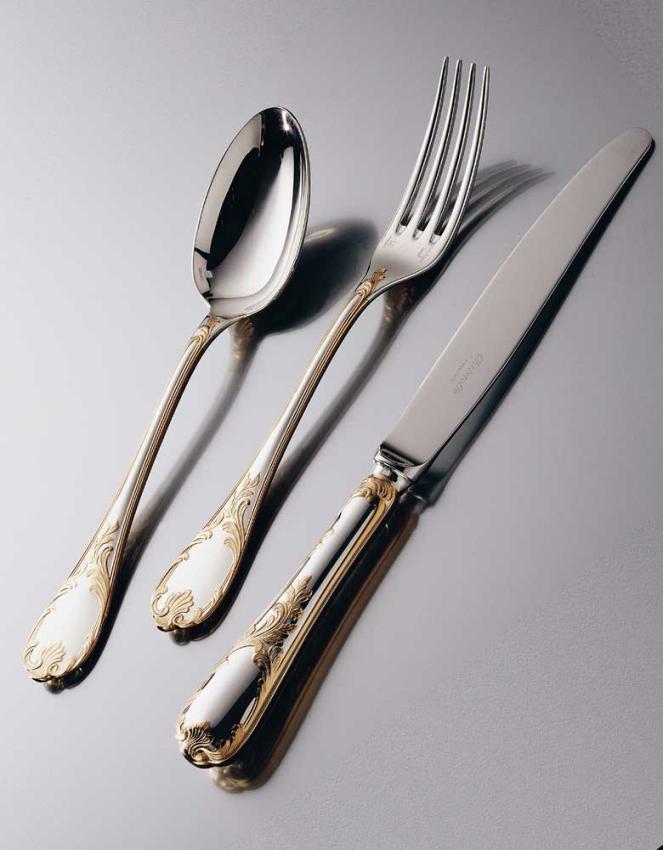
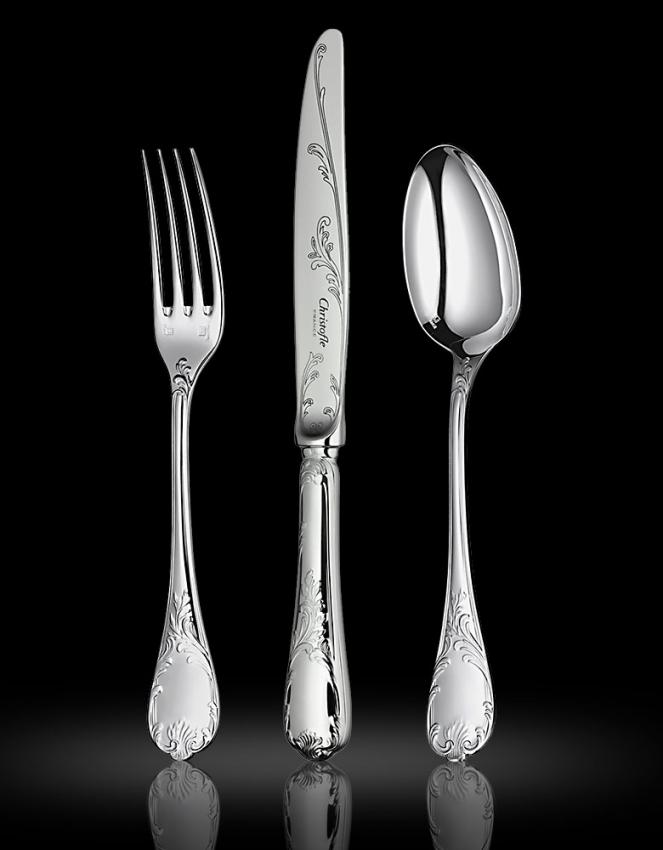
MarlyThe name comes from Marly Castle, built near Paris by Louis XIV, which served as a place to entertain guests after the hunt. It was a place where the rigor of the Versailles Etiquette' was left aside. King Louis XV spent a lot of time there, and the interior was decorated to his personal tastes. This small castle, along with its 12 hunting pavilions were destroyed during the French Revolution. The gardens and the watering place are all that remain with the exception of the statues called the 'Marly Horses' which were saved, and can be seen today where the Champs Elysées joins the Place de la Concorde. \The Marly pattern is ornamented in the Rocaille style which best presents XVIII century France. This style came back into vogue at the end of the XIX century, when this pattern was created. Christofle reinvented the old motifs applying them to the highest standards befitting of the celebrated hallmark. The delicatness of the ornamenting can be seen in the perfectly balanced suppleness of the chasing technique. This is Christofle's oldest pattern. It has never been omitted from the catalogues, and has always been in high demand over the past 150 years, despite changing fashions. Perhaps the explanation is that it has come to be seen by many as 'typically French'; what one expects to find on a French table.
sterling w/ gold accentsMarly
MarlyThe name comes from Marly Castle, built near Paris by Louis XIV, which served as a place to entertain guests after the hunt. It was a place where the rigor of the Versailles Etiquette' was left aside. King Louis XV spent a lot of time there, and the interior was decorated to his personal tastes. This small castle, along with its 12 hunting pavilions were destroyed during the French Revolution. The gardens and the watering place are all that remain with the exception of the statues called the 'Marly Horses' which were saved, and can be seen today where the Champs Elysées joins the Place de la Concorde. \The Marly pattern is ornamented in the Rocaille style which best presents XVIII century France. This style came back into vogue at the end of the XIX century, when this pattern was created. Christofle reinvented the old motifs applying them to the highest standards befitting of the celebrated hallmark. The delicatness of the ornamenting can be seen in the perfectly balanced suppleness of the chasing technique. This is Christofle's oldest pattern. It has never been omitted from the catalogues, and has always been in high demand over the past 150 years, despite changing fashions. Perhaps the explanation is that it has come to be seen by many as 'typically French'; what one expects to find on a French table.
silverplated · silver plated w/ gold decorMood
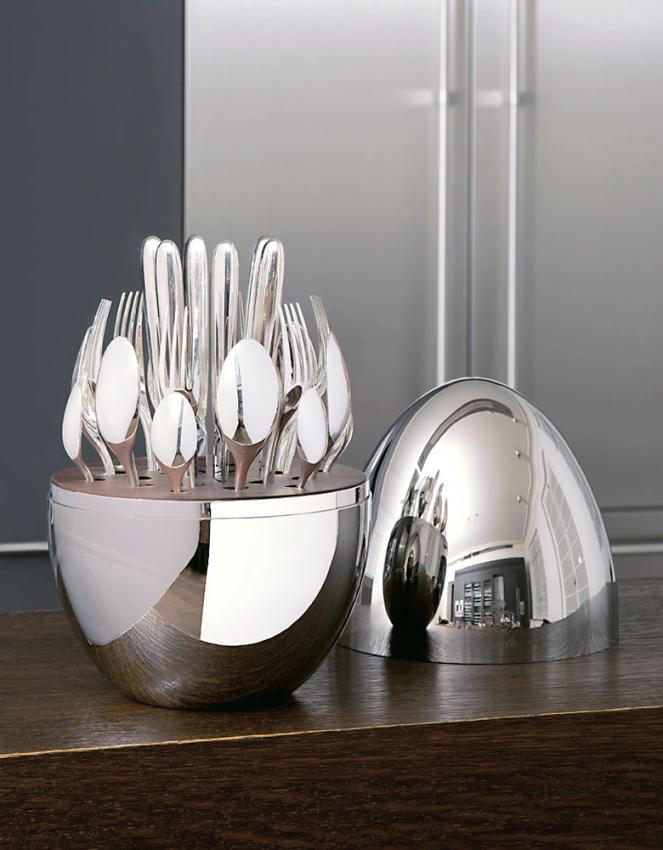
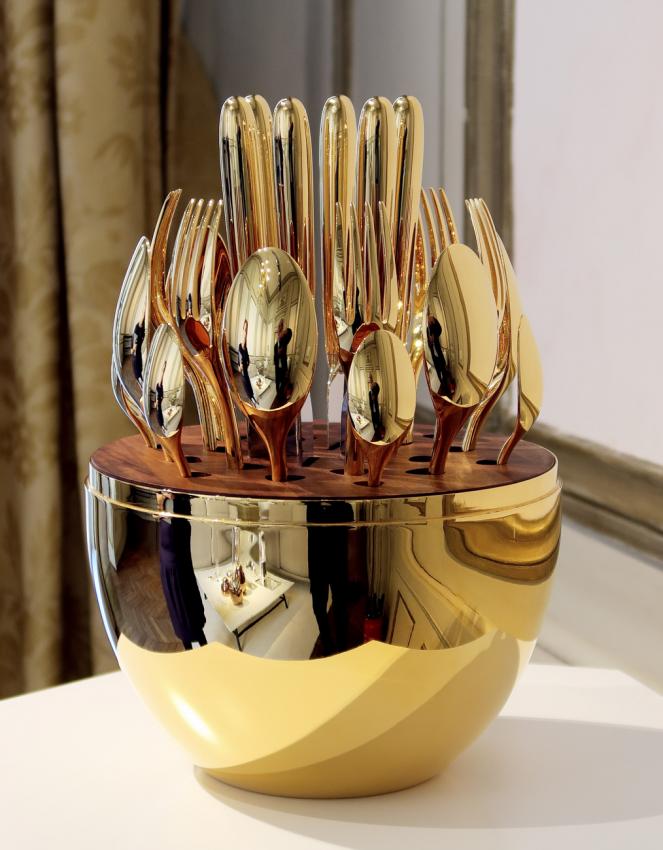
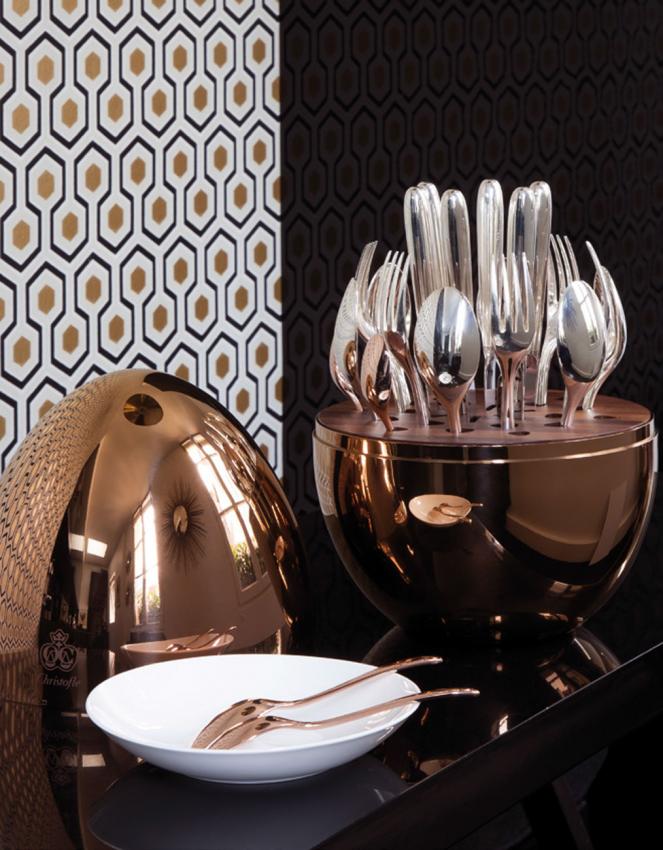
MoodThe egg. It is an object, a cutlery and shows how silently silverware can be integrated into everyday life. \In the studio, in the office - Christofle makes two centuries of tradition clash with Mood.\This new and incomparable concept is a new cheeky and luxurious lifestyle for every day.\The uncomplicated use in the middle of the tables at a dinner or at an informal and social brunch. It is more than a regular silver-plated Christofle tableware set, it is designed as a decorative object that brings shine and liveliness in a kitchen or living area. The high-quality design cover is made of stainless steel.
silverplatedPerles
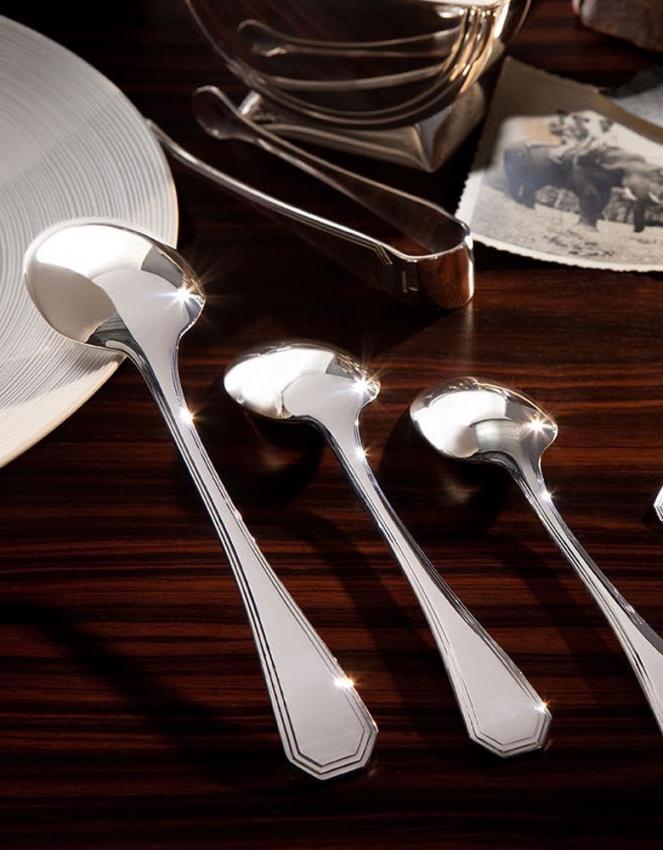
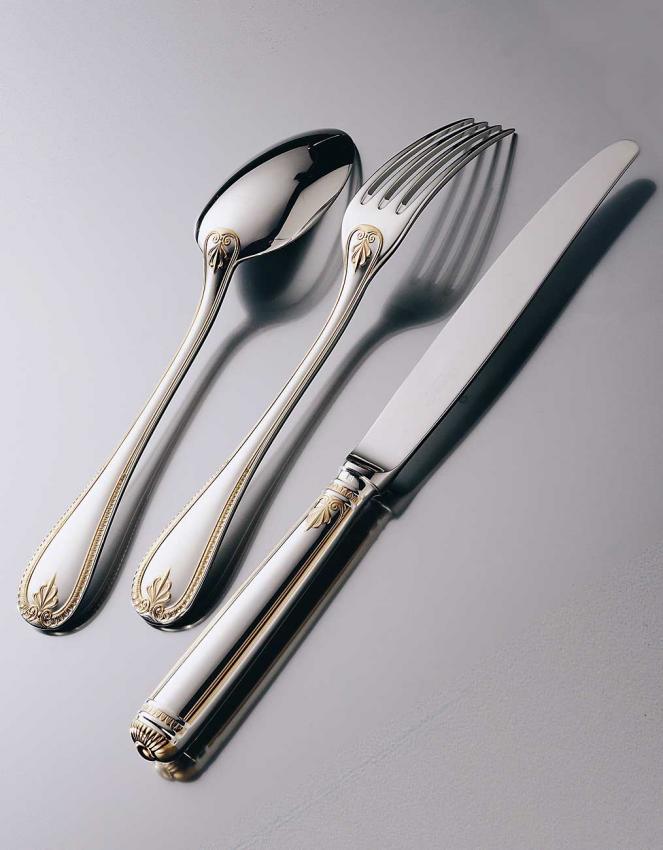
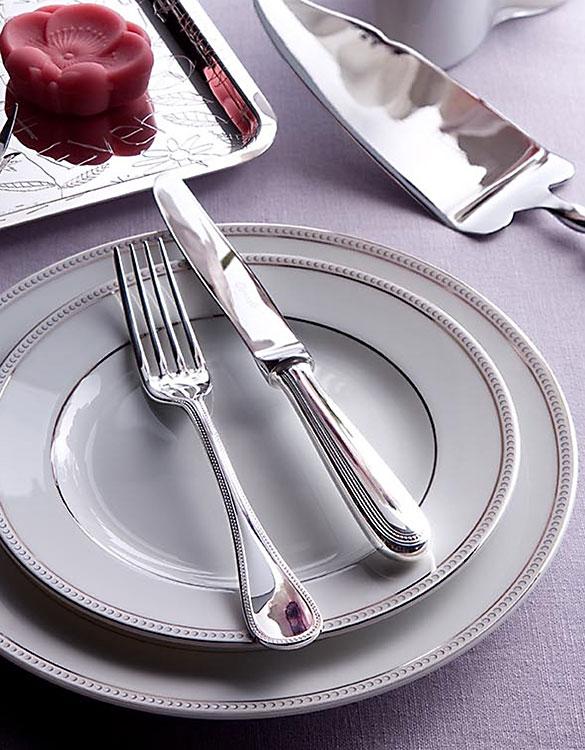
PerlesIn general, during the second half of the XVIII century, ( and most particularly in silversmithing ), the most popular decorative style was an allignment of pearles in half-relief in a long mould. How well the sobriety and elegance of these little pearls allies itself to the different styles throughout the world which find inspiration in this period. The well studied economy of decor leaves room for engraving on the vast polished surface. The manner in which the pearles are chased, reminds us of a fine pearl necklace. Notice that the pearles are smaller on the upper part of the stalk than on the spatula.
sterling silverPerles
PerlesIn general, during the second half of the XVIII century, ( and most particularly in silversmithing ), the most popular decorative style was an allignment of pearles in half-relief in a long mould. How well the sobriety and elegance of these little pearls allies itself to the different styles throughout the world which find inspiration in this period. The well studied economy of decor leaves room for engraving on the vast polished surface. The manner in which the pearles are chased, reminds us of a fine pearl necklace. Notice that the pearles are smaller on the upper part of the stalk than on the spatula.
silverplatedSpatours
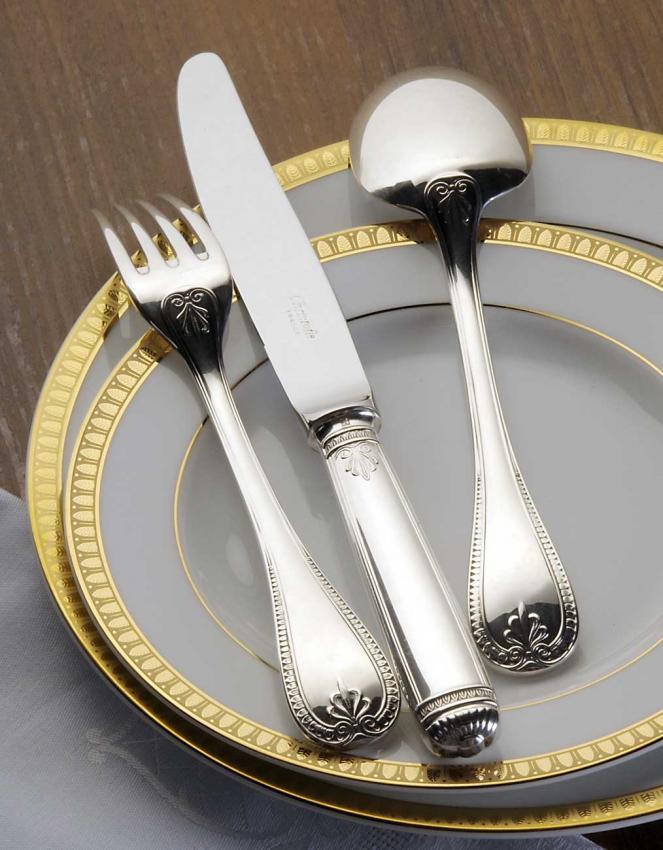
Spatours"Spatours" is a term invented by Christofle, arrived at through contracting the words "spatula" and "contours". The word spatula (of latin origin), describes a broadbladed, knife-like implement. French definitions liken it to a "petite pelle" - small server. The spatula shape is easily recognized in the extremities of the flatware. The word "contours" means outlines; in the case of this pattern, sinuous curved outlines. The style is quite classical of which there are many variations to be found from the XVIII century. The contour, being most elegant and perfectly adapted to the hand, has often been used by Christofle, especially for patterns from the XIX century. It has come to constitute one of the characteristics from which we achieve what is known as the "Christofle style". The Spatours pattern is, however, not representative of the Louis XV style as it is quite bare in appearance. The Louis XV style is usually more charged with design. For Spatours, the sobriety of the pattern is its strength, permitting it to fit harmoniously to tables dressed with pieces of different styles and eras. Therefore it is no surprise that it is often selected when a difficult choice is to be made. The spatula is ornamented by a double line which continues along the elongated stalk, ending in a bud borrowing the same design as that of the spatula. This marks the beginning of both the bowl (spoon) and the four-tined fork.

Details

This is explained by the history

of Christofle, in which the procedure of silver plating of alpaca – German silver called – were in the centre of the foundation of this company. In 1830 the founder of the Orfèvrerie Christofle - Charles Christofle - founded a factory, in the silver plating of objects was proceeded. The founder bought bit by bit different patents to this procedure of galvanization and was decorated in 1855 by Napoleon III with the title of the court supplier. From this history results, that not only in France still today silvered objects are named as Christofle silver. Thus you also find with us all silvered objects and cutleries under the column Christofle silver.

In the range of the silvered

cutleries Christofle is able to offer by far the choice biggest. Nevertheless, most cutleries are classical cutleries - not only with their names related to the French history.
The model Malmaison, called after the castle of the empress Josephine, wife of Napoleon Bonaparte is to be emphasized. This model was sketched and produced on behalf of Napoleon Bonaparte and has become to an excellent example of the French Empire-style. The palm which pulls through this decoration as an always returning motive is token as a symbol of the Napoleonic victories. You will recognize this palm on the cutlery as well as on the hollow product and the table silver - according to implementation on the edge or in the handle. Rumors say that Napoleon Bonaparte led this cutlery even on his battles with himself. Many of the silvered cutlery patterns are named after known buildings and their places in France. To call thus Marly, Chinon, Cluny or Albi. All cutleries is common an excellent handcrafting and outstanding use qualities. Of course you also find beside these models in the assortment of the silvered cutleries to quite classical French designs like the French Baguette, with Christofle called after the opera of Beethoven Fidelio as well as the Rubains, also known as Grand Ribbon. The both of the silvered cutleries models as a variation of the spade pattern are called Cluny and Chinon. However, both forms clearly differ from the spade shape which you may know in Germany. The French variation is roundish and seems softer than the angular German spade pattern. Therefore, a combination of these French patterns with spade pattern from German production is not advisable. A model, also available in silver plated, sterling silver as well as in stainess steel, is the model Albi. Albi is one with the most elementary basic forms of cutlery which it is only merely decorated by a running around thread. This decoration is probably spread in the whole western world, here you find the decoration in this pattern in an especially nice implementation.

Cutleries in sterling silver

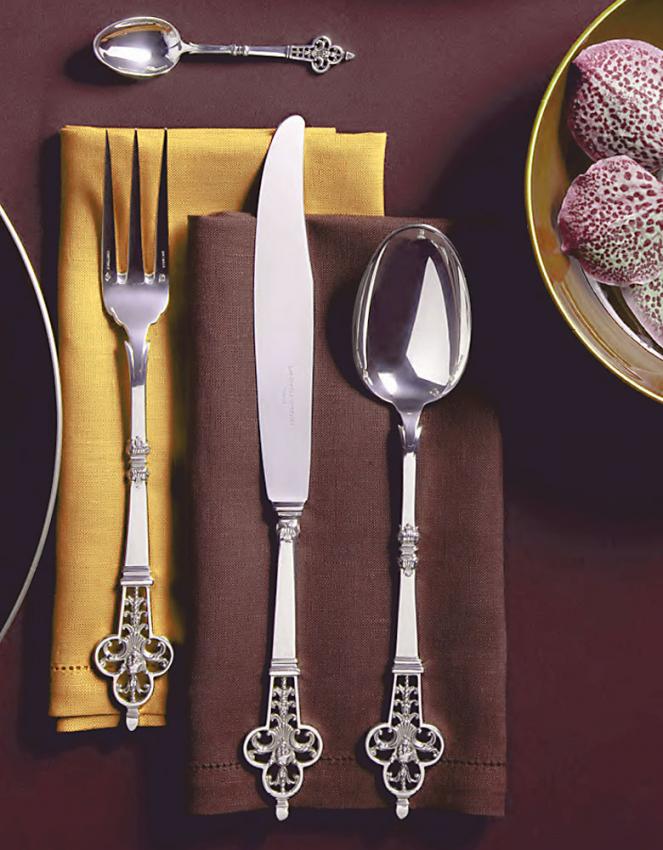
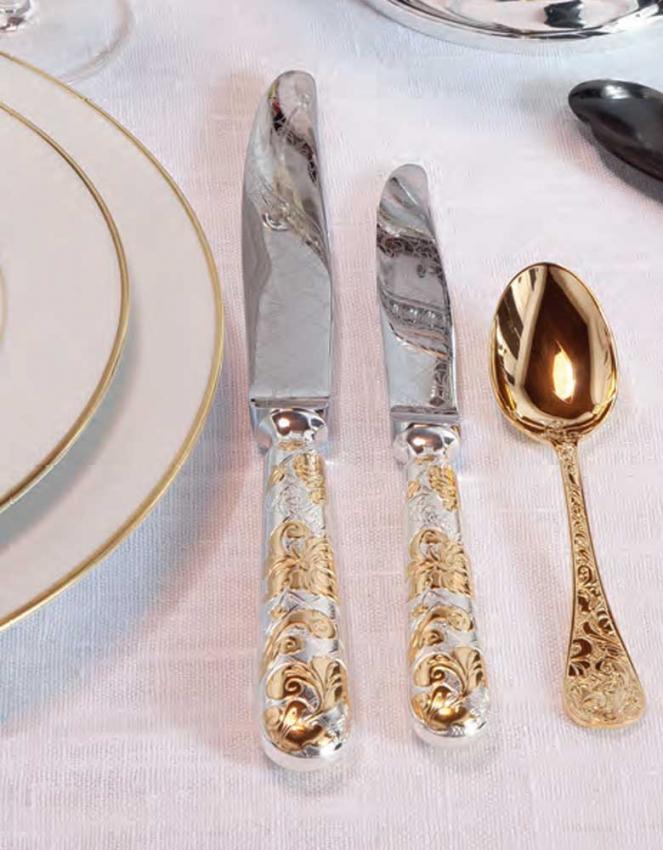
is limited to a smaller choice. Most cutleries which are available in sterling silver from Christofle are also available in silver plated implementation. An exception to it is the cutlery Renaissance which is produced bit by bit in laborious manual labour. The name refers to the French Renaissance and you may see at the end of the handle a small mask, a mascara, which forms the centre of a latticework from scrolls. Acanthus leaves, not simply stamped out but each one bit by bit worked out from the sterling silver, mark the centre of the handles. The decoration is completed by the engraving at the back of the fork and the spoon which marks a counterbalance to the opulent end of the handle. This cutlery is produced exclusively in sterling silver and can be delivered with a gold plating on request. You will find again the most popular models of Christofle in sterling. In particular the Malmaison, a front runner should be mentioned here also like in silvered plated, just as Marly, Albi and Perles. Quite remarkably is the Jardin d’Eden: Introduced three years ago Jardin d'Eden designed by Marcel Wanders is sold due to the enormous interest also in sterling silver. A special variation this cutlery is certainly the implementation in sterling silver with golden applications.

While the assortment of the

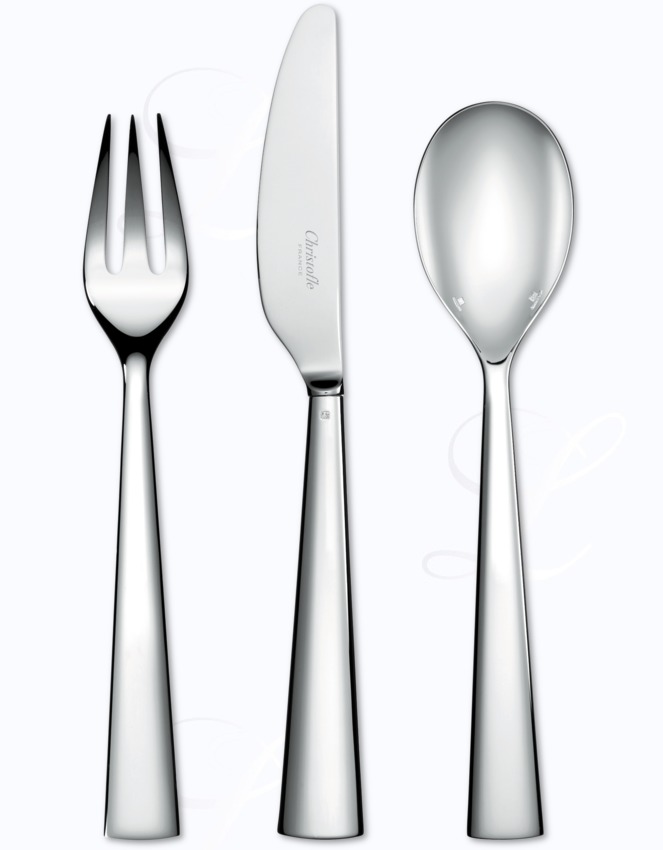
real silver cutleries Christofle keeps closely to the traditional patterns, the bigger experimental joy rules in the range of the stainless steel cutleries. Here though we find the already mentioned Christofle cutlery Albi in stainless steel and a design from the era of the Maison Cardeilhac, called Hudson, however, the prevailing majority of this range of cutleries is modern.
Also with the cutleries in stainless steel you will recognize the idea which guides through the entire collection of Christofle. The idea of connecting highest quality and perfect design with the today's life style.

Christofle

Coherent the name of Christofle all over the world is a synonym for French luxury.

Besteckliste selected the various silverware, flatware and gifts from this luxury brand for you. Dive with us one in quite unique universe of this luxury brand.

Cutlery of Christofle belongs without doubt to the best known products of this brand. Cutleries of Christofle are setting benchmarks in design and style. You find a big choice in cutleries in silver plated, a choice of exquisite cutleries in sterling...

Christofle cutleries in sterling silver are limited to a smaller choice. Most cutleries which they receive in sterling silver from Christofle are also available in silvered implementation. Christofle was founded at the beginning of the 19th century as...

When Christofle was founded 170 years ago the production of stainless steel cutlery was probably rather inconceivable. Charles Christofle founded a factory for the production of silvered goods – the Orfèvrerie Christofle. The same company has produced...

The history of Christofle begins in the 19th century of the galvanic silver plating of table accessories. In this first period of bloom originated extensive groups of big figurines, there is to be named a group of 4000 figurines ordered by Napoleon the...

Fine porcelain from Limoges. Christofle creates different series in dinnerware decors as a supplement to the cutleries and table accessories. This dinnerware which is produced in Limoges for this luxury brand is based with one an exception on one basic...

In his history the brand Christofle has proved over and over again that the company is able to connect stylish currents and lifestyle at the highest level with each other. So that it should not surprise that the french luxury brand goes for some years...

Crystal glass is a material which is not connected immediately with the name Christofle on the first view. Differently than in the segment of the china the glasses of Christofle are independent objects which form an attractive contrast to the cutlery...

The history of Christofle Paris begins in 1830 with the introduction of then absolutely innovative technology in the production of silver plated products. The founder Charles Christofle acquired different patents to the silver plating of metal and with it built up the fame of the company. Further on silver plated flatware in France is called 'Christofle silver'. The founder was awarded by Napoleon to the third in 1855 with the title of the purveyor to the court, after a little while he was decorated as K.u. K. purveyor to the court of the Austrian emperor. After his death the unstoppable raise of the Parisian brand continued. In his history the brand of Paris has realized outstanding art-objects for worldwide prominent personalities and projects. The equipment of the Hotel Ritz and the Orient-Express train from Paris to Istanbul with hollowware laid in the hands of this French manufacturer. Together with famous designers Christofle developed the objects which are to be found today in the various big art museums of the world. In the nineteen fifties the company Cardeilhac could be taken over.

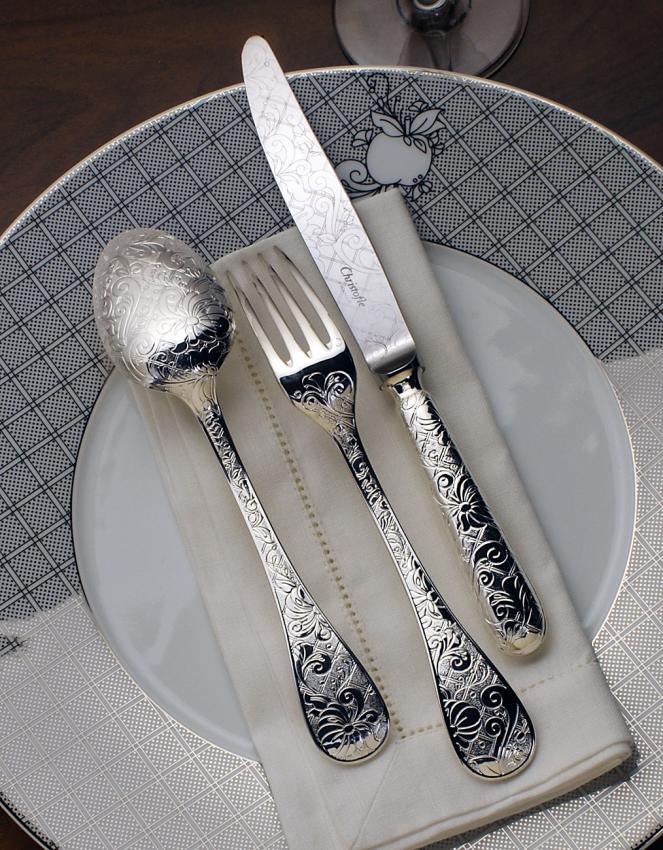
In Christofles range you find some of the still absolutely topical designs which are based on the designs of the Maison Cardeilhac even today. In the topical assortment you find designers like Andrée Putman, Marcel Wanders and Gio Ponti to name only some. To emphasize particularly is the recently resulted flatware Jardin d'Eden from Marcel Wanders. This originally as a cutlery design visualizes the joys and innocence of the garden Eden on the entire surface of the flatware - including the knife blades - with a fine engraving. In the beginning made in silver plated, this design is also manufactured in sterling as well. On account of the great success the subject was continued on a big assortment of tableware, plates, trays and centerpieces. As usual with this manufacturer, we experience a constant change and a constant enlargement of the assortment, so that we may be curious on the next objects from the flatware-series of Jardin d'Eden. Completely new ideas the Paris brand realizes since 2012: high-quality trays, bowls and wine coolers from designer hand from stainless steel complement the range: Oh de Christofle, a series dedicated to the subject bar and cocktail. Besteckliste of course offers primarily the flatware of Christofle. The design of this flatware reaches from the classical flatwares like Malmaison from the Napoleonic era, the models Marly, Cluny and Perles up to the quite modern cutleries like Jardin d'Eden from Marcel Wanders.

Christofle is mainly represented in the range of the silver plated cutleries, this is owed of course in primarily to the history of the brand. Beside these cutleries the luxury brand from Paris produces a small selected range of cutleries of sterling silver. To emphasise particularly is the model Renaissance, made 100% of handcrafted. Every single piece of this outstanding cutlery is worked out bit by bit in pure manual labour. The cutleries in silver plated, as well as the cutlery in sterling silver are available custom-made with a golden decoration or with a entire gold plating. On these pages we offer only one small choice to this custom-made products, however, many are available with us. Please ask for it. Beside the flatware in silver and in sterling silver the French manufacturer delivers a small but elegant choice of flatware in stainless steel. The modern and contemporary draughts are dominating with the steel cutleries. Besides you find well-known traditional cutleries in excellent elaboration - like the design of Albi 2 and Hudson, which are based on traditional designs - in the steel flatware range of Christofle. In these cutleries the pattern Elementaire - characterized by the vertically standing knife - is to be emphasized. This cutlery in an excellent material thickness - by which it lies very well in the hand - develops its charm then when you place your table in the French way: the fork and the spoon with the prongs and bowls down and the knife with the edge of the blade to the table cloth. See there: Now it turns out a harmonious picture in which all ends of the handles show a soft curve down.