

stainless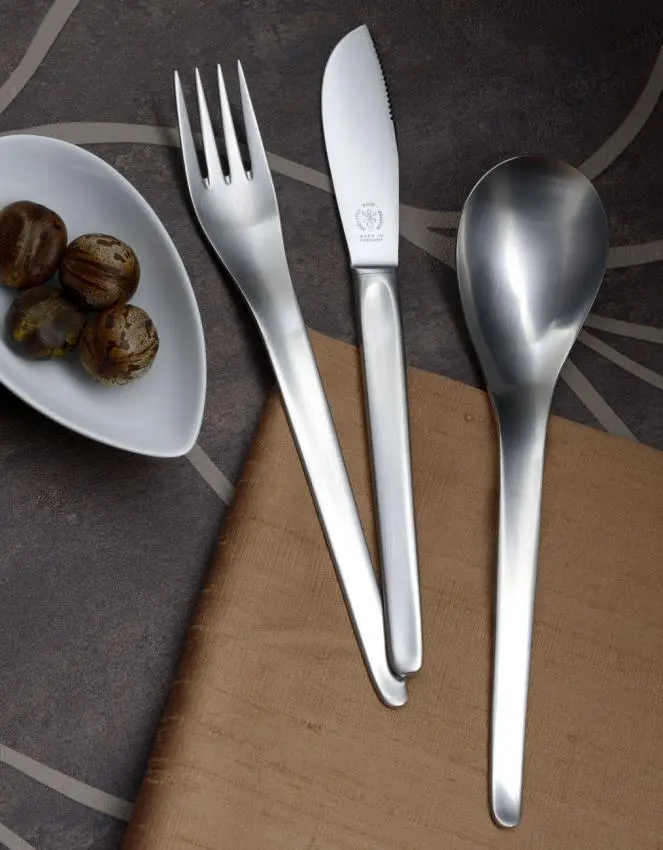
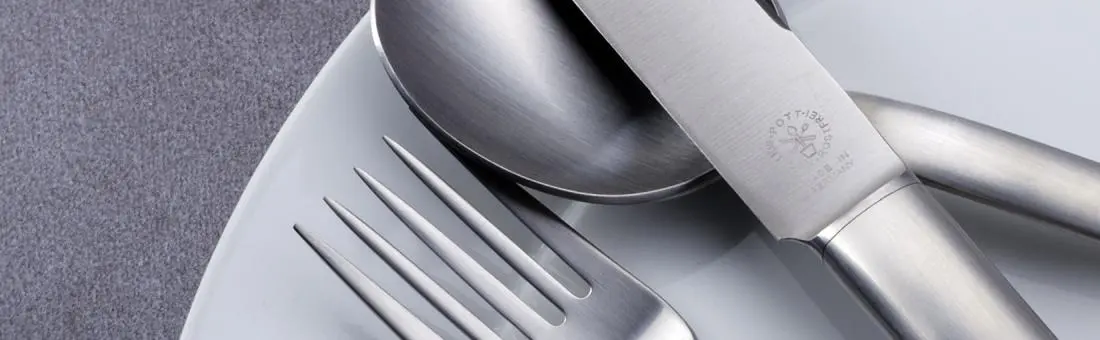
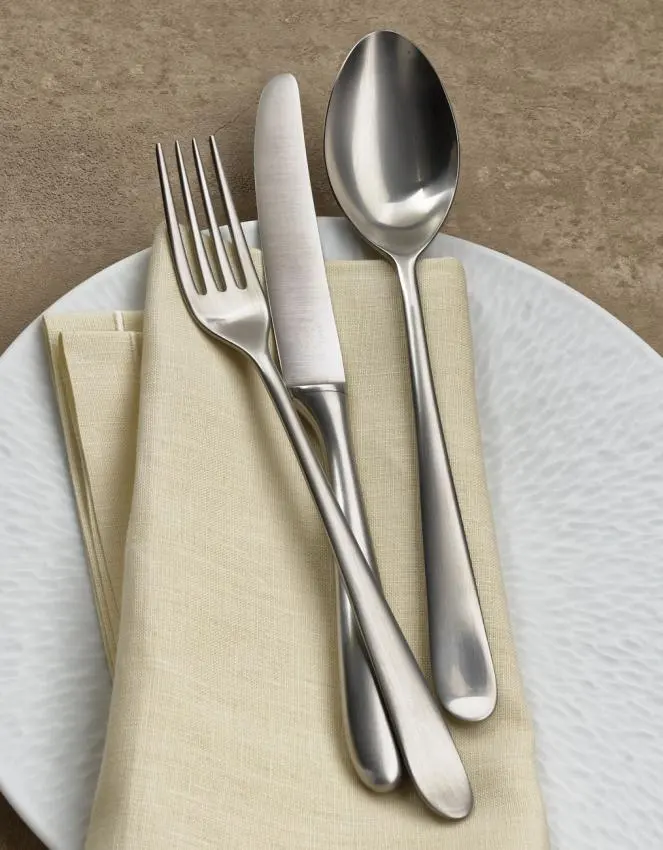
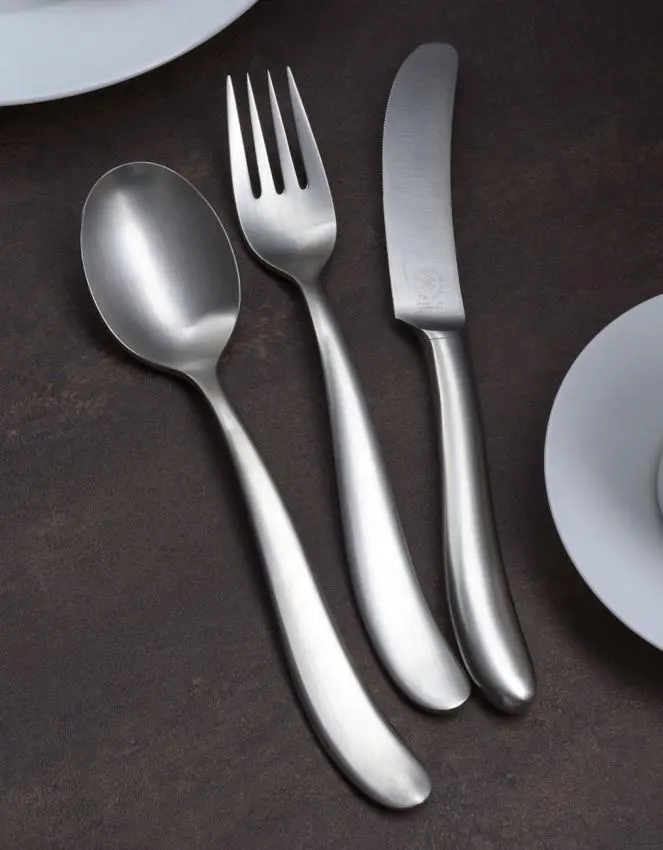
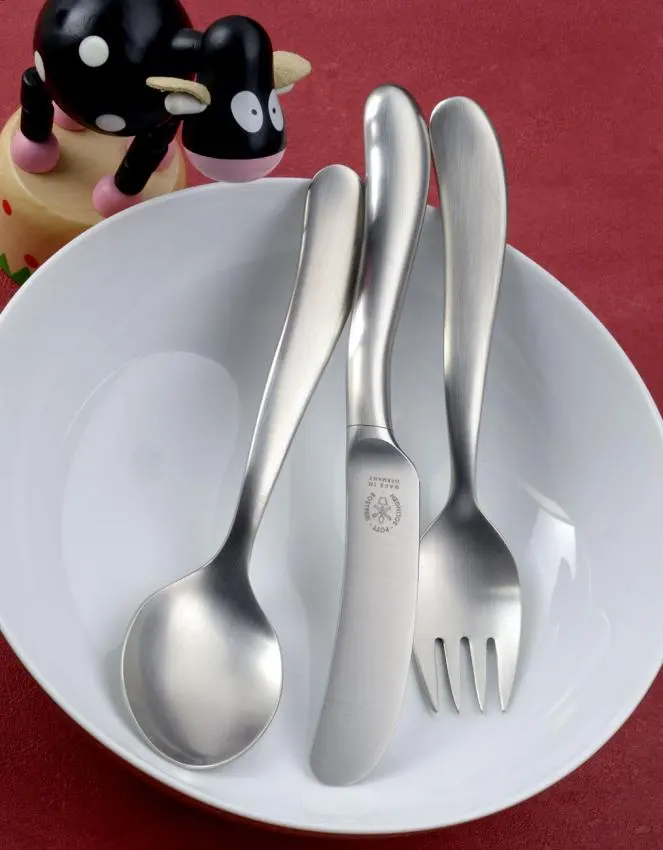
22Nature is the approach of innovation. A chestnut leaf was the inspiration for the unusual shape of the cutlery. Created …from €43

Pott cutleries are characterised
by consistent design and big functionality. Carl Pott, son of the company founder, gave more than 50 years distinction to the manufacture with his straight design .
11 collections
shaped by Carl Pott - master of his field and inspired from Bauhaus and Deutscher Werkbund .
With the stainless steel cutleries designs by him are represented from the fifties up to the works of his late time end of the seventies.
And how far he was ahead of his time the history of the Pott 22 shows impressively. The pattern was made already in 1955 and became worldwide famous 17 years.
Pott 22 with his shape of chestnut leaves was selected as the flatware of the Olympic Games in Munich 1972.
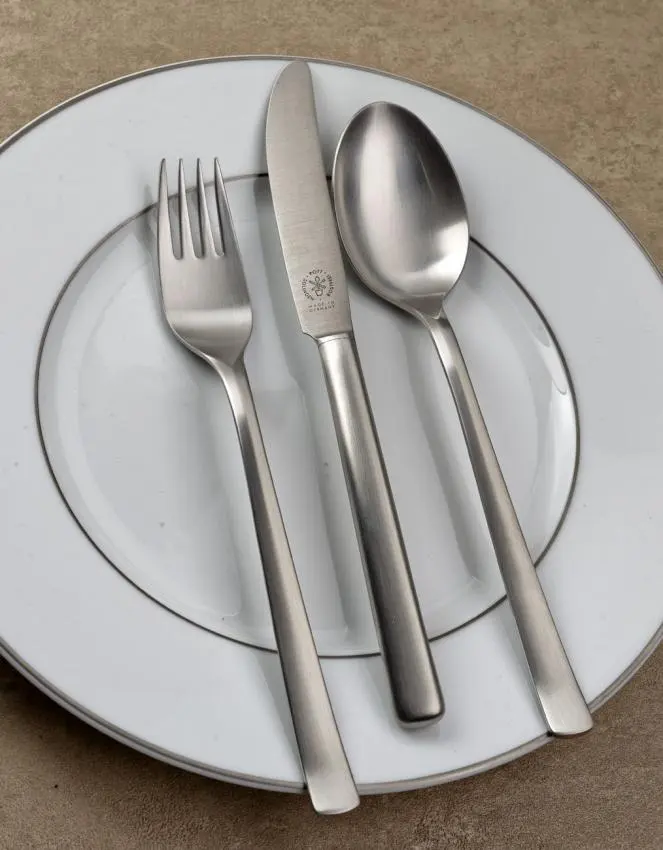
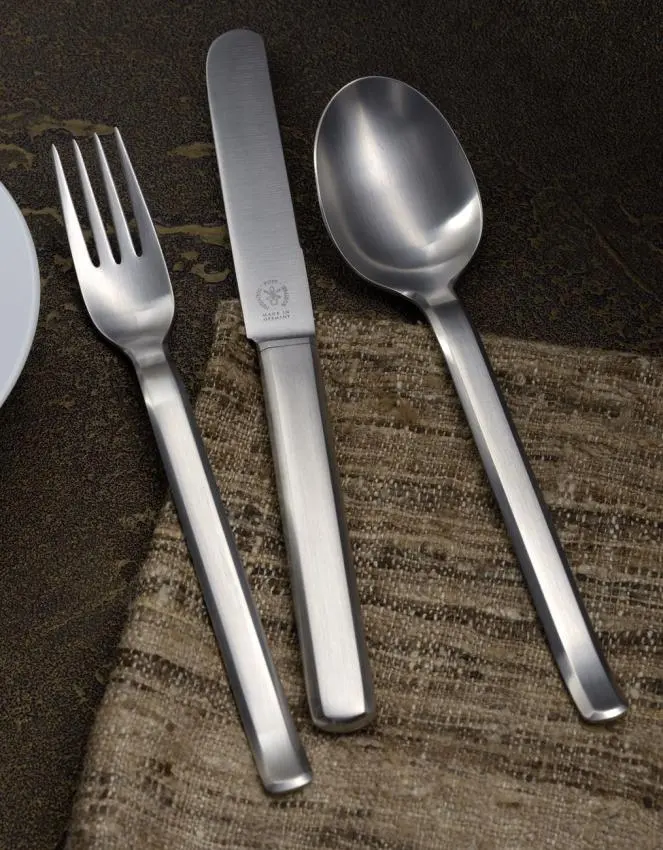
And the most popular design was made by Carl Pott not until 1975 and was produced with the number 33:
Parallel lines and the fork equipped with five prongs are the characteristic feature this of this draught.
Unusually the small groove, the small notch at the end of the handle which finish the design at the lower end. Today this successful design made in sterling silver as well as in stainless steel 18/10.
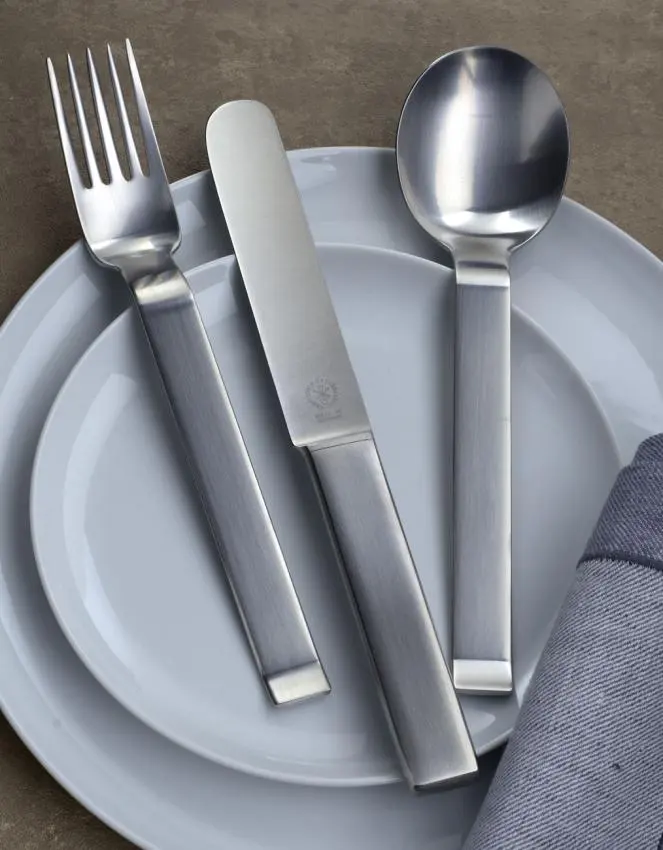
quite similar. Created in 1979 as a commissioned work for the donation to the Cologne council-silver (Kölner Ratssilber) and the use of forms was reduced once again:
Again he decides for a five pronged forks, an element which was later taken up by other designers as for example Wolfgang Karnagel as well.
The handles are shaped again absolutely in parallel, but, in contrast to Mod. 33 clearly more wide and flat.
The small notch at the end of the handle like with the model 33 - which forms the right angle to the parallel sides is not necessary any more:
The ends are just cut off.
According to the motive of the order the width of the cutlery is representative and brings in the version in stainless steel the material with the matt brushed finish to bear.
Nevertheless, beside the majority in prominent designs by Carl Pott there's still place with the stainless steel cutleries for an other creator, like the designer Ralph Krämer.
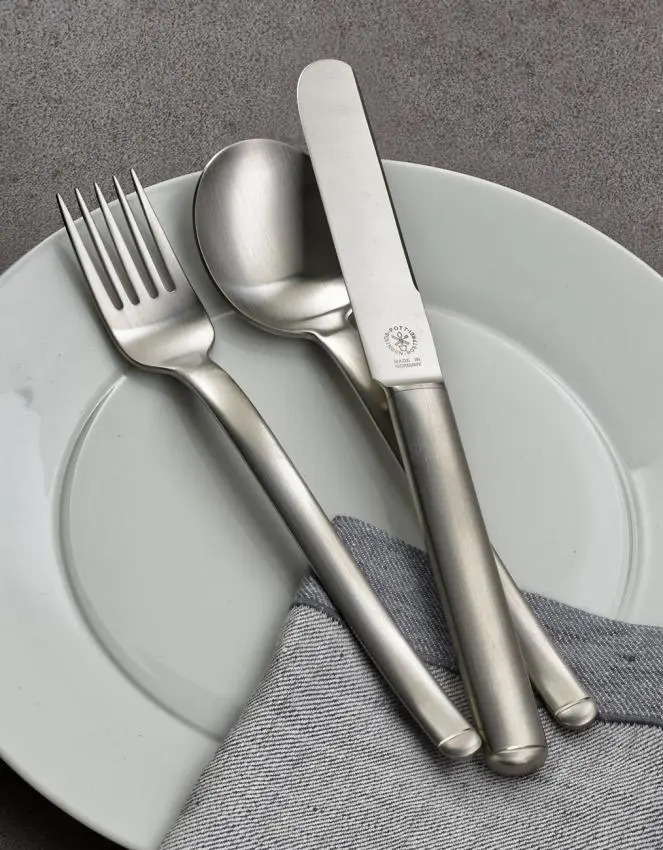
Ralph Krämer, known by his design for the company Mono and Robbe & Berking, combines the functionality of the Pott cutleries with soft fluent shapes.
In cooperation with the son of Carl Pott, Hannspeter Pott, he originated 41 Bon Dia and the matching child cutlery Bonito.
Ergonomics and functionality, elegance and the typical workmanship gives this pattern a place under the most popular cutleries of the manufacture Pott.
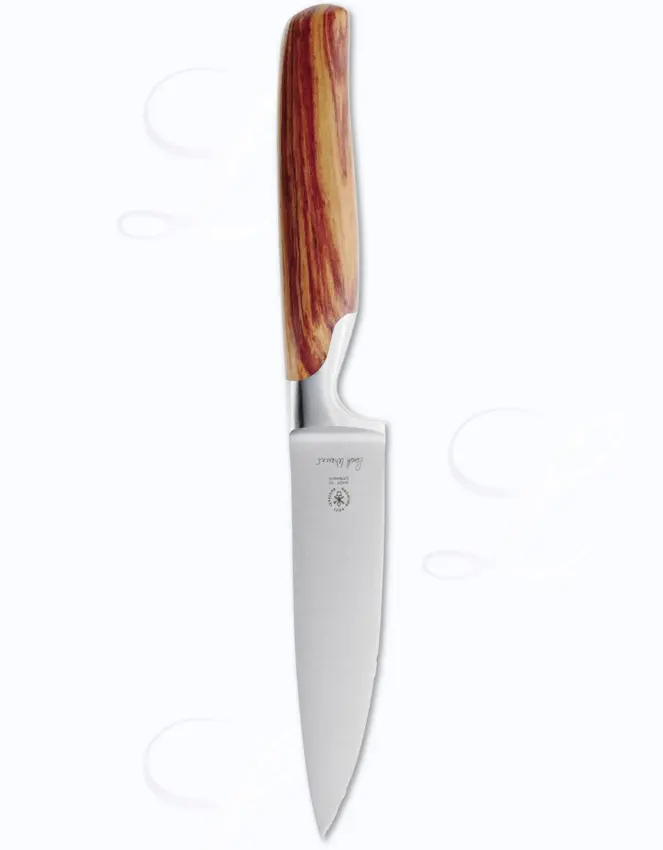
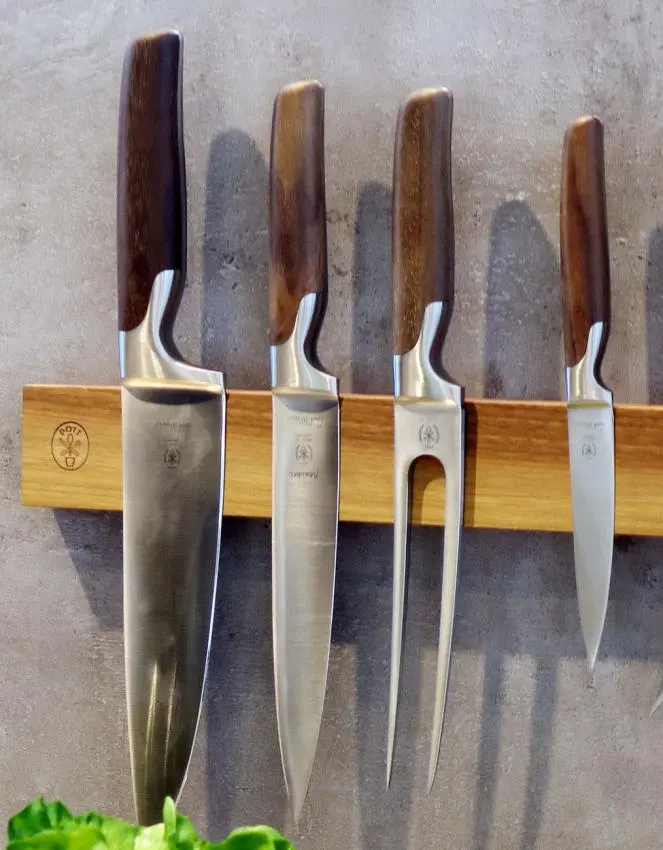
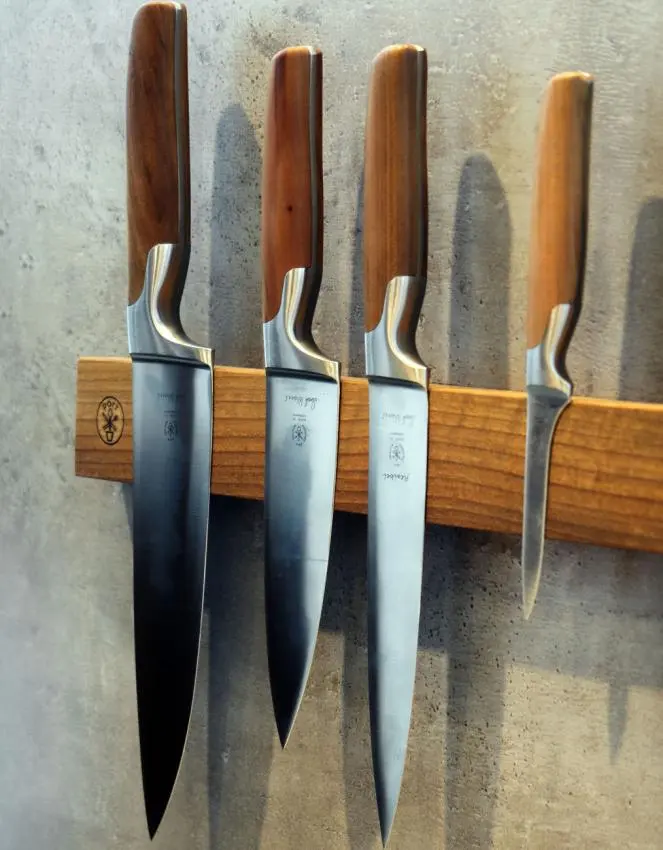
is also dedicated again to the products of the first years of the brand, to the knives. In cooperation with the TV cook Sarah Wiener the manufacture develops knives, just like the cutleries: With the highest processing quality and ergonomics.
And Pott cutleries are a fixture of the dining culture above all fashions.
Silver cutleries from the manufacture Carl Hugo Pott will outlast all trends. All sterling silver cutleries have in common the commitment to distinct design and excellent ergonomics.
Carl Hugo Pott, founded in Solingen in 1904 shows an illustrious history which is testified by many outstanding cutlery models.
Already in 1935 the fame of Pott's cutleries jumped up when Carl Pott, son of the company's founder, designed the pattern...
Carl Pott, son of the company founder, gave more than 50 years distinction to the manufacture with his straight design .
The cutlery workshop Carl Hugo Pott already was founded in 1904 in Solingen, the so-called knife-town (Klingenstadt) in which for 800 years the production of knives is located. Still today the cutlery companies Picard & Wielpütz, Carl Mertens, Paul Wirths and Zwilling J.A.Henckels are based in the small German town. The founder Carl Hugo Pott at first dealt in his of the workshop with the production of knife-blades of Damascus steel. With the entry of the son of the founder in 1932, Carl Pott, the family company changed to a cutlery manufacture.
The son applied decisive own ideas, inspired by Bauhaus and the Deutschen Werkbund, into the father's company. At that time stylistically the flatware design had already nearly left behind the eclectic decorated style of the outgoing 19th century and the Jugendstil of the beginning of the 20th century. After his death in 1985 Carl Pott left behind comprehensive lifework in his style, the logical formal creation. Already in 1935 he designed the pattern with which which should founded all other success of Pott: The model 16 was honoured in 1937 on the world exhibition in Paris with the Diplom D’Honneur. Other awards followed for just 31 year-old Carl Pott and encouraged him in his effort for the New Objectivity. Today many pattern sketched by Carl Pott are to be found furthermore in the assortment of Pott and remain unmistakeably in the clear design quality. The craft skills of Carl Pott are testified by several master's certificates and not only as a designer, but also as a craftsman he was qualified to create cutleries with highest functionality.
In the course of his life his work was internationally decorated with more than 700 awards. Over and over again Carl Pott has appointed famous designers to sketch cutleries for his company. He could win Hermann Gretsch for the model 81 in 1947/48, which beside his designs for Arzberg (Mod. In 1382) belongs to one of his prominent works. Wilhelm Wagenfeld sketched in 1950 the silver cutlery number 83 and Josef Hoffmann, co-founder of the Wiener Werkstatt and Deutscher Werkbund, the model 86. Hoffmann designed this piece of art in sterling silver in the 50ies with clear reminiscences to the expressive Art Nouveau, outstanding in the assortment of the manufacture. Also in the fifties the company C. H. Pott was able to supply the German Lufthansa, how Wolf Karnagel did with Wilkens 30 years later: Don Wallance - who sketched cutleries 10 years later also for Stelton - created the model 21 for the airline. Today as a testimonial of a perpetual chain of landmarks in the cutlery history the entire archive of the company Pott is to find in the museum of Solingen Deutsches Klingenmuseum. Also after the death of Carl Pott the manufacture and the production is continued as since beginning of the cutlery production in the company: Predominant is the artisanry and many individual production steps are necessary to produce a single cutlery part which carries the name Pott. In a global modern world it would seem almost antiquated, if the quality of the results of would not justify this expenditure.
A flatware of Pott is still a product of handcraft, with some technical innovations or optimisations are no option not to diminish their quality. And also nothing has changed, when in 2006 the company after 102 years in family property was taken over from the family Seibel from Mettmann. The company Seibel was founded already in 1895 and in the 60ies named after his best known pattern in mono Metallwarenfabrik. Mono-a became the synonymous of design for everybody - and became the most successful German design. Today the productions of Mono and Pott are brought together. In the same working time in which a Pott knife is produced in many single production steps - the steel forged, blued, the surface brushed and the knives married afterwards - in this time in a factory on another continent a multiple of knives may be produced, however, a Pott knife simply needs these numerous operations. And that doesn't matter.
Unique in his surface with the typical dark matting, the brushed knives, clearly in his design and straight in his material pure high-grade steel or massive sterling silver.